Hardcore · Updated
New Hardcore Techno Releases
Last week brought 31 new hardcore releases. The most hyped songs: "Self Aware" by Lil Texas, "FA TI CO but it's 2026" by Lekkerfaces and "Sidequest (Dr. Peacock Remix) - Live Cut" by Dr. Peacock.
All new Hardcore releases











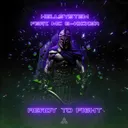 Ready to Fight
Hellsystem, MC B-Kicker
Hardcore subgenres
Hardcore playlists on Spotify
Hardcore releases in numbers
Most new hardcore releases come out on a Friday (63%), with a smaller wave on Thursday (17%).
Share of releases by weekday, 29 Jun-20 Sept 2026
- Mon4%
- Tue5%
- Wed9%
- Thu17%
- Fri63%
- Sat1%
- Sun1%
An average week brings 44 new hardcore tracks, and week 38 has 3 so far.
New releases per week, 29 Jun-20 Sept 2026
- W2766
- W2845
- W2957
- W3058
- W3131
- W3251
- W3332
- W3440
- W3545
- W3630
- W3731
- W38so far3
What is Hardcore?
Every new Hardcore release shows up here on release day - mainstream and underground, updated daily. Hardcore techno runs 160-200 BPM with distorted kicks and raw energy: the Rotterdam-born sound behind Masters of Hardcore and Thunderdome.
Hardcore techno (usually just “hardcore”) is the oldest and rawest branch of the hard dance family: 160-200 BPM, heavily distorted kick drums and an attitude that has never softened since it emerged from Rotterdam’s early-1990s rave scene. It is the sound of Thunderdome and Masters of Hardcore, and the root from which styles like uptempo and frenchcore later grew.
Rotterdam, 1992
Hardcore was born as a working-class counterpoint to Amsterdam’s polished house scene. In 1992, while working the counter of Rotterdam’s Mid-Town record store, Paul Elstak founded Rotterdam Records (the first Dutch hardcore label), and the same year the first Thunderdome events brought the new “gabber” sound to massive halls. The recipe was simple and radical: superfast tempos, overdriven kick drums and zero compromise. Gabber culture (shaved heads, tracksuits and the “hakken” dance) became one of the most distinctive youth movements the Netherlands has produced. The classic old-school sound lives on today under the gabba / early hardcore banner, and the overlap between the two terms is untangled in hardcore vs gabber.
From millennium hardcore to today
After a dip in the late 1990s, hardcore reinvented itself with a darker, heavier “millennium” sound and institutions like Masters of Hardcore grew into arena-scale events. The modern scene spans everything from mainstage anthems to industrial grit: Angerfist, the genre’s biggest contemporary name, alongside Miss K8, N-Vitral, Tha Playah, Evil Activities and Neophyte. At the harder end, hardcore blurs into uptempo and eventually speedcore; on the melodic side it shares festivals and fans with hardstyle. The lines to those neighbours are drawn in uptempo vs hardcore and hardstyle vs hardcore.
The sound
The kick drum is everything: distorted until it becomes a wall of mid-range pressure, hitting four to the floor at speeds hardstyle never reaches. Around it sit hoover stabs, roared vocals and samples that range from menacing to darkly comic. Where hardstyle invites you to sing, hardcore invites you to hakken.
Where to hear new hardcore first
The Hardcore Release Radar collects every notable new hardcore release daily, and the Hardcore Top 100 charts the genre’s most-streamed current tracks. Every hardcore release we track is listed above, updated every day.
Questions, answered
Where can I find new hardcore releases?
This page lists every new hardcore techno release on Spotify, updated daily. To listen, follow the Hardcore Release Radar playlist, which collects the same new tracks each day, or the Hardcore Top 100 for the genre's most-streamed current tracks.
What BPM is hardcore?
Hardcore techno typically runs between 160 and 200 BPM. Its faster offshoot uptempo pushes past 200 BPM, while early-90s gabber often sat around 160-180.
Is gabber the same as hardcore?
Gabber is the original Rotterdam form of hardcore techno from the early 1990s. The term is often used for the classic, old-school sound. Modern hardcore grew out of gabber but spans many styles, from millennium hardcore to industrial and uptempo.
Where did hardcore techno come from?
Hardcore emerged in Rotterdam in the early 1990s as a harder counterpoint to Amsterdam's house scene. DJ Paul Elstak founded Rotterdam Records, the first Dutch hardcore label, in 1992, the same year the legendary Thunderdome events began.
Who are the biggest hardcore artists?
Angerfist is the genre's biggest modern name, alongside Miss K8, N-Vitral, Tha Playah and Evil Activities, while pioneer Paul Elstak still performs to huge crowds more than three decades in.
When do new hardcore tracks come out?
New hardcore tracks mostly come out on Friday, and a smaller wave lands on Thursday. The rest of the week is quiet by comparison, which makes the end of the week the time to check for new music.
How is this list built?
Every day, HDRR checks more than 3,000 hand-picked hard dance artists on Spotify for new releases. A track lands on this hardcore list when the artist behind it is filed under hardcore techno or one of its styles, such as uptempo or frenchcore. Tracks by artists HDRR does not follow are not included, and neither are unreleased or upcoming songs.
How do I get new hardcore releases every week?
The free HDRR newsletter lands every Monday with the previous week's releases, filtered to the sub-genres you pick. For listening, the Hardcore Release Radar playlist on Spotify adds new tracks every day, and @hdrr.info on Instagram posts the latest releases as a daily story.
Top Hardcore artists
 Joost949.3K followers
 Angerfist594.9K followers
 Dr. Peacock468.7K followers
 Mandragora411.3K followers
 Paul Elstak320.8K followers
 I Hate Models296.7K followers
 Refused291.9K followers
 Sefa212.9K followers
 Lil Texas191.5K followers
 999999999168.5K followers
 Miss K8165.9K followers
 Nicolas Julian153.2K followers