Hardstyle · Updated
New Hardstyle Releases
Last week brought 76 new hardstyle releases. The most hyped songs: "Don't tell your dreams - hard version" by Coone, "4 THE RAVE" by Sub Zero Project and "Kitty Kat - Extended Mix" by LNY TNZ.
All new Hardstyle releases

 Beast
BeastOptimusXtreme, Iss AURA

 Don't tell your dreams - hard version
Coone, LOVIXX, STOSLIV

 Victory - Hardstyle Edit
Marc Korn, Semitoo, Ray Silver, Alphachoice


 Last Dance
Marc Benjamin, ZIFRIOS, Hsynth, Anissia & Nixote
Hardstyle subgenres
Hardstyle playlists on Spotify
Hardstyle releases in numbers
Most new hardstyle releases come out on a Friday (56%), with a smaller wave on Thursday (24%).
Share of releases by weekday, 29 Jun-20 Sept 2026
- Mon2%
- Tue5%
- Wed11%
- Thu24%
- Fri56%
- Sat2%
- Sun<1%
An average week brings 67 new hardstyle tracks, and week 38 has 4 so far.
New releases per week, 29 Jun-20 Sept 2026
- W2759
- W2861
- W2979
- W3057
- W3169
- W3268
- W3343
- W34102
- W3560
- W3659
- W3776
- W38so far4
What is Hardstyle?
Every new Hardstyle release on Spotify lands here the day it drops - the latest tracks from the whole scene, updated daily. Hardstyle itself is the backbone of hard dance: around 150 BPM, reverse bass, screeching leads and huge euphoric melodies, carried by festivals like Defqon.1 and Qlimax.
Hardstyle is an electronic dance genre built on a distorted, punchy kick drum at around 150 BPM, an off-beat “reverse bass”, screeching synth leads and big euphoric melodies. Born in the Netherlands around the turn of the millennium, it has grown into the flagship sound of the hard dance scene - the music of Defqon.1 mainstages, Qlimax anthems and a worldwide festival culture.
From hard trance to a scene of its own
Hardstyle grew out of late-1990s hard house and hard trance, whose off-beat bass it inherited and hardened. The first event credited as a hardstyle event was Qlubtempo, staged by Dutch event company Q-dance in Zaandam in 2000, and Q-dance trademarked the term “hardstyle” on 4 July 2002. Pioneers like The Prophet (who went on to found the Scantraxx label in 2002), DJ Zany, DJ Pavo and Lady Dana shaped the early sound. The institutions followed quickly: Qlimax held its first edition in 2001, and 2003 brought the first Defqon.1, still the biggest and longest-running hardstyle festival in the world.
The sound: kicks, reverse bass and screeches
Three elements define hardstyle. First, the kick: heavily distorted and pitched, it is as much a melodic instrument as a drum. Producers spend years refining their kick design. Second, the reverse bass: a distorted bass hit on the off-beat that gives the genre its bouncing groove. Third, the leads: dissonant “screeches” and soaring supersaw melodies that swing between aggression and euphoria. Early tracks ran near 140 BPM; the modern standard is 150 and rising.
Euphoric, raw, and everything between
From roughly 2010 the genre split into two poles. Euphoric hardstyle leaned into emotional melodies, vocals and festival singalongs - the lane of Headhunterz, Brennan Heart and Da Tweekaz. Rawstyle answered with darker atmospheres, harder kicks and heavy screech work, today carried by acts like Sub Zero Project and Warface. Crossover acts such as Showtek (hardstyle pioneers before their move into mainstream EDM) and D-Block & S-te-Fan show how permeable the borders are, and where hardstyle ends, hardcore picks up the pace. New to the scene? Two explainers map the borders: hardstyle vs hardcore and hardstyle vs hard techno.
Where to hear new hardstyle first
The fastest way to stay current is the Hardstyle Release Radar, our Spotify playlist that collects every notable new hardstyle release daily. For the genre’s biggest current tracks, the Hardstyle Top 100 charts what is actually being streamed right now, and every single release we track is listed above, updated every day.
Questions, answered
Where can I find new hardstyle releases?
Right here: this page lists every new hardstyle release on Spotify, updated daily. To listen, follow the Hardstyle Release Radar playlist, which collects the same new tracks each day, or the Hardstyle Top 100 for the genre's biggest current songs.
What BPM is hardstyle?
Modern hardstyle sits around 150 BPM, with many tracks pushing toward 160. Early hardstyle from the 2000s was slower, typically around 140 BPM.
Where did hardstyle originate?
Hardstyle emerged in the late 1990s and early 2000s, primarily in the Netherlands with strong early input from Italy. The first event billed as hardstyle was Q-dance's Qlubtempo in 2000, and Q-dance trademarked the term 'hardstyle' in July 2002.
What is the difference between hardstyle and hardcore?
Hardstyle runs around 150-160 BPM with a bouncing reverse bass and prominent melodies, while hardcore is faster (usually 160-200 BPM), with harder, more distorted kicks and rawer energy. The two scenes overlap heavily at festivals like Defqon.1.
What is a reverse bass?
The reverse bass is hardstyle's signature groove: a distorted bass note placed on the off-beat right after each kick drum, creating the genre's unmistakable 'thump-bounce' rhythm.
Who are the biggest hardstyle artists?
Headhunterz, Brennan Heart, Showtek, D-Block & S-te-Fan and Da Tweekaz are among the genre's most-streamed names, alongside pioneers like The Prophet and modern mainstage acts such as Sub Zero Project.
When do new hardstyle tracks come out?
Most new hardstyle tracks come out on a Friday, with a smaller wave on Thursday. Fewer arrive earlier in the week and hardly any at the weekend, so Thursday and Friday are when this page fills up.
How is this list built?
HDRR follows more than 3,000 hand-picked hard dance artists on Spotify, checks them for new releases every day and takes each track's genre from its artist. Two kinds of tracks are missing: those by artists HDRR does not follow, and unreleased or upcoming songs, which only show up once they are out on Spotify.
How do I get new hardstyle releases every week?
Sign up for the free HDRR newsletter, which arrives every Monday with the past week's releases in the sub-genres you choose. To hear new tracks as they drop, follow the Hardstyle Release Radar playlist on Spotify, and follow @hdrr.info on Instagram for a daily story of the latest releases.
Top Hardstyle artists
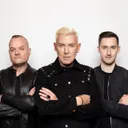 Scooter1M followers
 Headhunterz522.5K followers
 Showtek509.3K followers
 Brennan Heart360.7K followers
 Da Tweekaz349K followers
 Ran-D301.8K followers
 Jebroer281.4K followers
 Kayzo267.9K followers
 Harris & Ford256.9K followers
 Sub Zero Project251.8K followers
 D-Block & S-te-Fan247.5K followers
 Coone222.4K followers